

What is the sound - dampening property of Mylar emergency blankets?
Jan 12, 2026
Leave a message
Hey there! As a supplier of Mylar Emergency Blankets, I often get asked about the different properties of these nifty little blankets. One question that's been popping up more frequently lately is about the sound - dampening property of Mylar emergency blankets. So, let's dive right in and explore this topic.

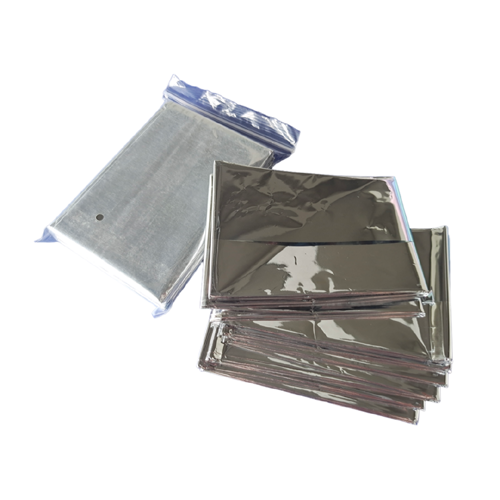
First off, what exactly is a Mylar emergency blanket? Well, it's a lightweight, reflective blanket made from a material called BoPET (biaxially-oriented polyethylene terephthalate), commonly known as Mylar. These blankets are super popular because they're incredibly portable, easy to store, and can reflect up to 90% of body heat, which makes them great for emergency situations like keeping warm after a car accident or during a camping trip. You can check out our Mylar Emergency Blanket for more details.
Now, let's talk about sound dampening. Sound dampening refers to the ability of a material to reduce the intensity of sound waves. When sound waves hit a surface, they can either be reflected, absorbed, or transmitted through the material. A good sound - dampening material will absorb or reflect a significant portion of the sound waves, reducing the amount of sound that passes through.
So, how does Mylar stack up in terms of sound dampening? Mylar is not typically known as a high - end sound - dampening material like acoustic foam or heavy curtains. It's a thin, plastic - like material, and its main function is heat reflection rather than sound absorption. However, it does have some sound - dampening properties, albeit limited.
The way Mylar can dampen sound is through reflection. Since it's a highly reflective material, when sound waves hit the Mylar surface, a portion of them gets bounced back. This reflection can reduce the amount of sound that travels through the blanket. But it's important to note that this effect is not as pronounced as with materials specifically designed for soundproofing.
Let's compare Mylar emergency blankets with other types of emergency blankets in terms of sound dampening. We also offer Transport Blanket and Non - woven Fabric Blanket. Transport blankets are often made of thicker materials, which can provide better sound insulation compared to Mylar. The non - woven fabric in non - woven fabric blankets can also absorb some sound waves, offering a bit more sound dampening than Mylar. However, Mylar's advantage lies in its lightweight and reflective nature, which is crucial in emergency situations where portability and heat retention are key.
In some scenarios, the limited sound - dampening property of Mylar emergency blankets can still be useful. For example, in a noisy outdoor environment during an emergency, a Mylar blanket can help reduce the amount of ambient noise to a certain extent. If you're using it as a makeshift shelter in a windy area, it can also muffle the sound of the wind to make your environment a bit more peaceful.
But if sound dampening is your primary concern, Mylar emergency blankets might not be the best choice on their own. You could consider combining them with other sound - absorbing materials. For instance, you could place a Mylar blanket on top of a layer of acoustic foam or a thick non - woven fabric. This combination can enhance the overall sound - dampening effect while still taking advantage of Mylar's heat - reflecting properties.
Now, you might be wondering how we test the sound - dampening property of our Mylar emergency blankets. We use a simple setup in our lab. We have a sound source on one side of the blanket and a sound meter on the other side. We measure the sound intensity before and after placing the blanket between the source and the meter. By comparing these two values, we can calculate the reduction in sound intensity, which gives us an idea of the blanket's sound - dampening ability.
It's also worth mentioning that the sound - dampening performance of Mylar emergency blankets can be affected by several factors. The thickness of the Mylar material plays a role. Thicker Mylar will generally provide better sound dampening than thinner ones. The way the blanket is installed or used also matters. If it's tightly stretched, it might reflect sound waves more effectively compared to a loose, wrinkled blanket.
In conclusion, while Mylar emergency blankets aren't the go - to solution for heavy - duty soundproofing, they do have some sound - dampening properties that can be useful in certain situations. Their main strength lies in their heat - reflecting and portability features, which are essential for emergency preparedness.
If you're interested in purchasing Mylar emergency blankets or any of our other products like transport blankets or non - woven fabric blankets, we'd love to talk to you. Reach out to start a conversation about your specific needs. Whether you need them for personal emergency kits, first - aid stations, or large - scale emergency preparedness programs, we're here to help.
References
- General knowledge about materials physics and emergency blanket properties.
- Internal testing reports from our product testing lab.